The $47 I Threw Away Last Month Without Noticing
I opened my freezer last Tuesday and found chicken I don't remember buying.
It had ice crystals growing on the surface like tiny frozen trees.
I threw it away. Again.
So I did the math. One month of forgotten groceries: $47.
That's 12 lattes. Gone. Nowhere.
I used to think I was the only one with this problem. Turns out, almost everyone I talked to had the same confession hiding in their fridge.
The average household throws away $47 worth of groceries every month without noticing. Fridgi scans your grocery receipts with AI and sends alerts 3 days before anything expires.

Fridgi · AI Fridge & Food Manager
The Fridge Blindspot We All Share
Here's what happens. You go to the store with good intentions. "I'll make stir-fry on Monday, pasta on Wednesday, salmon on Friday." You buy everything, bring it home, put it in the fridge, and then... life happens.
Monday turns into takeout because you worked late. Wednesday is leftover pizza from the office. Friday you're too tired to cook, so you order delivery. Meanwhile, the spinach you bought is slowly turning into green soup in the vegetable drawer.
According to the USDA, the average American household throws away 30-40% of their food supply. That's roughly $1,500 per year per family. And it's not because people don't care. It's because we simply lose track of what we have.
The problem isn't motivation. It's visibility.
My Top 5 Most-Wasted Items
I tracked my food waste for a month before trying to fix it. Here's what kept ending up in the trash:
- Leafy greens — Lettuce, spinach, kale. They have a 3-5 day window and I always missed it.
- Tofu — I'd use half a block and forget about the rest. By the time I remembered, it was yellow and slimy.
- Milk — A gallon seemed like a good deal until I poured half of it down the drain.
- Fresh herbs — Bought cilantro for one recipe, used a tablespoon, watched the rest wilt.
- Frozen meat — "I'll cook it next week" turned into "What is this mystery package from six months ago?"
The pattern was clear: I wasn't buying too much food. I was just losing track of it once it entered the fridge.
The One-Photo Experiment
I ran an experiment. For 30 days, every time I came home from the store, I took one photo. Just the receipt. That's it.
Something read it. Something understood it.
Three days later, my phone buzzed: "Tofu — expires tomorrow."
I checked. It was there. Behind the milk. Exactly where I'd forgotten it.
That night I made soup.
Here's the thing — that tofu would have been discovered three days later, fuzzy and smelling sour, and it would have gone straight to the trash. One notification saved $2 worth of tofu. Sounds trivial, right? But when this happens with 15 items per month, the numbers add up fast.
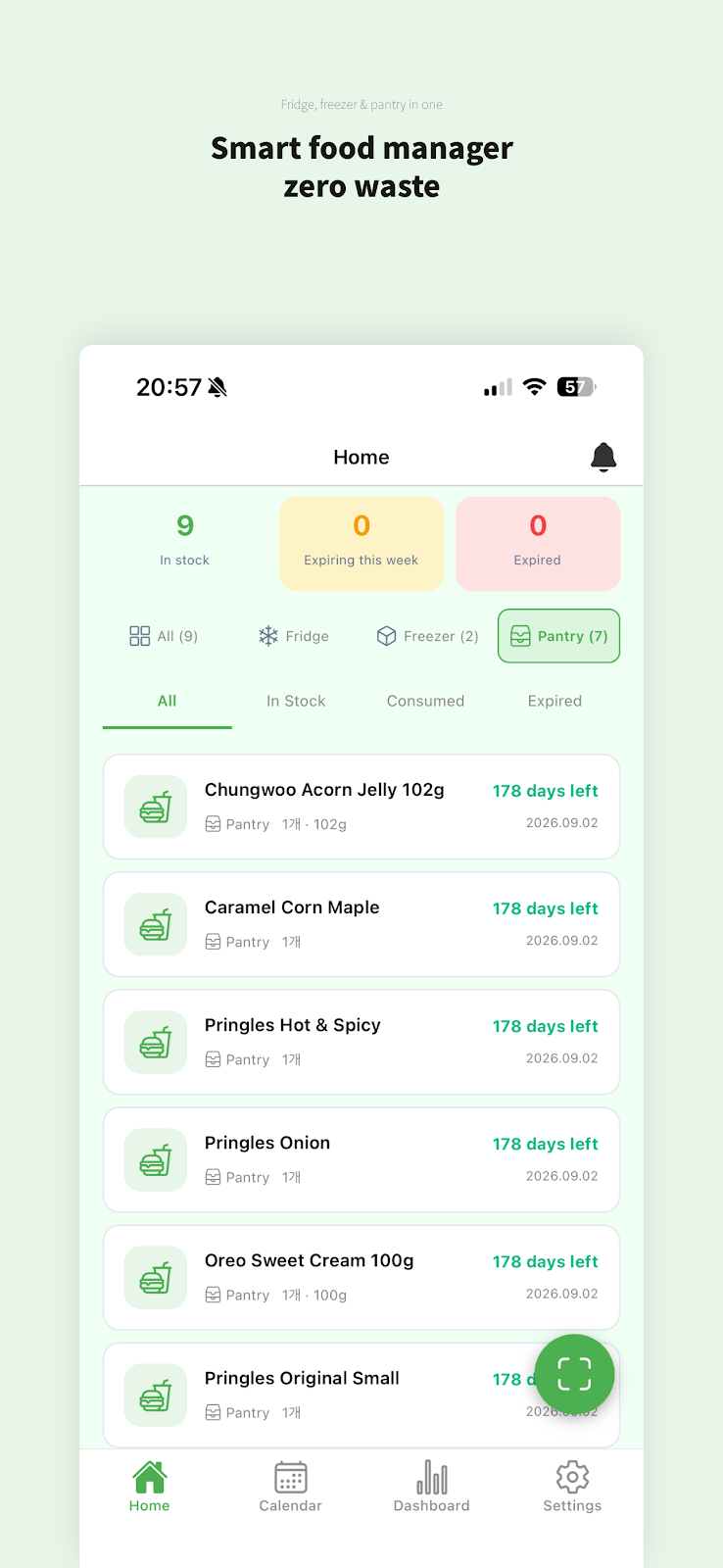
How a Receipt Became a Fridge Map
At first, I was skeptical. How much could a photo of a receipt really change? But the AI reads each item from the receipt automatically and estimates expiry dates based on food category. No manual entry. No spreadsheets. No sticky notes on the fridge door.
My total effort was two things:
- Snap a photo of the receipt after grocery shopping
- Check the fridge when a notification pops up
That's it. From those two actions, I started naturally planning meals around what was about to expire. "Oh, the chicken thighs are good until Thursday — let me make curry tomorrow night." It wasn't a chore. It was just information arriving at the right time.
The Numbers After 30 Days
After a month, I looked at the dashboard.
84% consumption rate.
The month before? I'm guessing barely half.
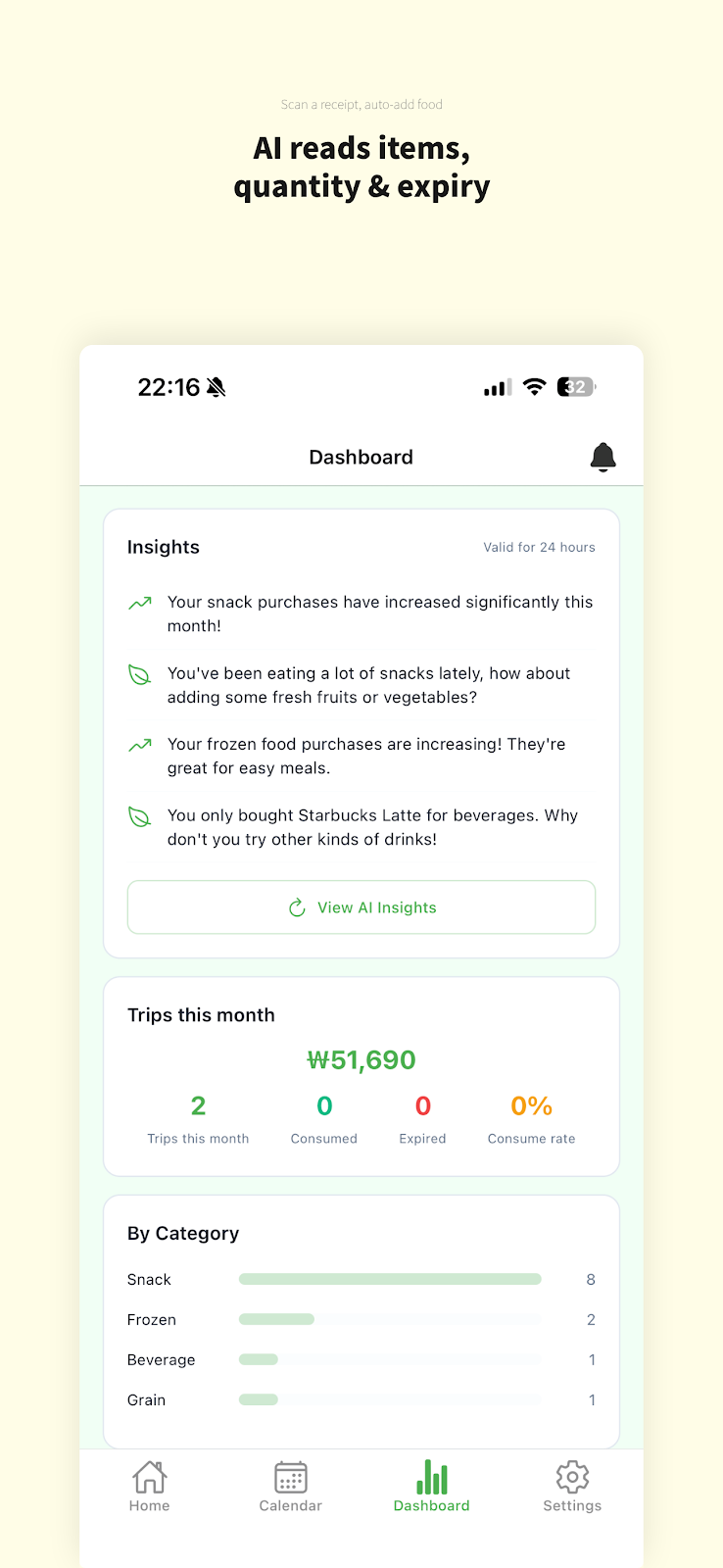
84% means I actually ate 84% of what I bought. The remaining 16% wasn't stuff I forgot about — it was conscious decisions. I knew the bell peppers were expiring but I had dinner plans that night. The difference between "I forgot" and "I chose" is enormous when it comes to guilt.
Unexpected Side Effects
Saving money was the obvious benefit. But some changes surprised me:
- I grocery shop less. When you know what's in your fridge, you only buy what's missing. Before, I had a habit of buying "just in case" items that duplicated what I already had.
- I cook more. When your phone tells you "ground beef expires in 2 days," you naturally start googling recipes. It turned out to be the nudge I needed.
- Less trash, literally. My kitchen trash bag lasts noticeably longer. Fewer soggy vegetables, fewer mystery containers going into the bin.
- Less guilt. Opening the fridge used to come with a background feeling of dread — "What's rotting in there now?" That feeling is gone.
Some Practical Tips That Actually Work
Beyond using an app, here are a few habits I picked up along the way:
- First In, First Out (FIFO). When you put new groceries away, move older items to the front. This is what restaurants do, and it works at home too.
- The "eat this first" shelf. Designate one shelf or section of your fridge for items that need to be used within 2-3 days. Make it eye-level.
- Buy less, more often. Two smaller grocery trips per week beat one big haul where half the produce goes bad before you reach it.
- Freeze before it's too late. If you know you won't eat that bread by Thursday, freeze it on Tuesday. Most things freeze better than you think.
Perfection Isn't the Point
Let's be real: 100% is impossible. Sometimes you get invited to dinner. Sometimes you're exhausted and just order Thai food. That's fine. The point isn't to use every last scrap — it's to know what's in your fridge and when it needs to be used.
I don't feel guilty opening my fridge anymore.
I know what's inside.
If you're also struggling with managing your daily schedule, check out this AI-powered daily briefing app that summarizes your day each morning. And if you're in Korea dealing with gift card clutter, this post about managing Korean gift cards might help too.
Free Download

Related Posts
Frequently Asked Questions
How do I track food expiry dates in my fridge?
Take a photo of your grocery receipt with Fridgi. The AI automatically identifies food items and expiry dates, then notifies you 3 days before anything expires.
How much food does the average household waste per month?
US households waste about $1,500 worth of food per year — roughly $125/month. Fridgi helps cut this significantly by tracking every expiry date automatically.
댓글
댓글 쓰기